TRIALS,
TRIBUNALS,
TRUTH COMMISSIONS
Mining in Neskantaga's Ancestral Homelands
This investigation includes a detailed report due to be published here by 6 November 2026.This investigation is part of the research project ‘Designing Resistance: Evidentiary Tools for Indigenous Struggles Against Green Colonialism’, supported by the AHRC Design Exchange Partnerships programme.The ‘Ring of Fire’ is a vast critical mineral deposit in northern Ontario, Canada, discovered in the mid-2000s. Since then, mining corporations have pursued access with the backing of the provincial and federal governments. The Canadian government claims that mining metals such as nickel and copper from the Ring of Fire is necessary for Canada’s ‘green transition’, and its future economic and energy security.
The deposit lies within lands subject to ‘Treaty 9’, a historical agreement between the Canadian settler state and 49 Indigenous First Nations. The deposits and the planned extraction infrastructure extend across many First Nations’ ancestral homelands, including those of the Neskantaga First Nation (FN).
Explore the Investigation on Forensic Architecture’s website here
TEAM
Omar Ferwati, Researcher-in-Charge
Susan Schuppli, Project Supervisor
Infrastructure Beyond Extractivism Team Dayna Nadine Scott & Nessie Nankivell
This design-led research project is a research collaboration between Forensic Architecture, Goldsmiths University of London and industry partner, the Design Museum also based in London. Funded through the AHRC 2025-26.
21 Oct 2026 – 21 Oct 2026
This investigation includes a detailed report due to be published here by 6 November 2026.This investigation is part of the research project ‘Designing Resistance: Evidentiary Tools for Indigenous Struggles Against Green Colonialism’, supported by the AHRC Design Exchange Partnerships programme.The ‘Ring of Fire’ is a vast critical mineral deposit in northern Ontario, Canada, discovered in the mid-2000s. Since then, mining corporations have pursued access with the backing of the provincial and federal governments. The Canadian government claims that mining metals such as nickel and copper from the Ring of Fire is necessary for Canada’s ‘green transition’, and its future economic and energy security.
The deposit lies within lands subject to ‘Treaty 9’, a historical agreement between the Canadian settler state and 49 Indigenous First Nations. The deposits and the planned extraction infrastructure extend across many First Nations’ ancestral homelands, including those of the Neskantaga First Nation (FN).
Explore the Investigation on Forensic Architecture’s website here
TEAM
Omar Ferwati, Researcher-in-Charge
Susan Schuppli, Project Supervisor
Infrastructure Beyond Extractivism Team Dayna Nadine Scott & Nessie Nankivell
This design-led research project is a research collaboration between Forensic Architecture, Goldsmiths University of London and industry partner, the Design Museum also based in London. Funded through the AHRC 2025-26.
ACTIVITIES
21 Oct 2026 – 21 Oct 2026
WITHOUT CONSENT: Mining in Neskantaga's Ancestral Homelands Screening & Panel Discussion at Close-Up Cinema, London, UK

Map showing the proposed access road (red) and Forensic Architecture’s analysis, including known and likely settlements; memories of the landscape; movement; sites of hunting, fishing, and plant harvesting; and ceremonial sites. The map demonstrates that the road cuts across a dense cultural and ecological fabric not fixed to any one point. Road data: Impact Assessment Agency of Canada. (Forensic Architecture, 2026)
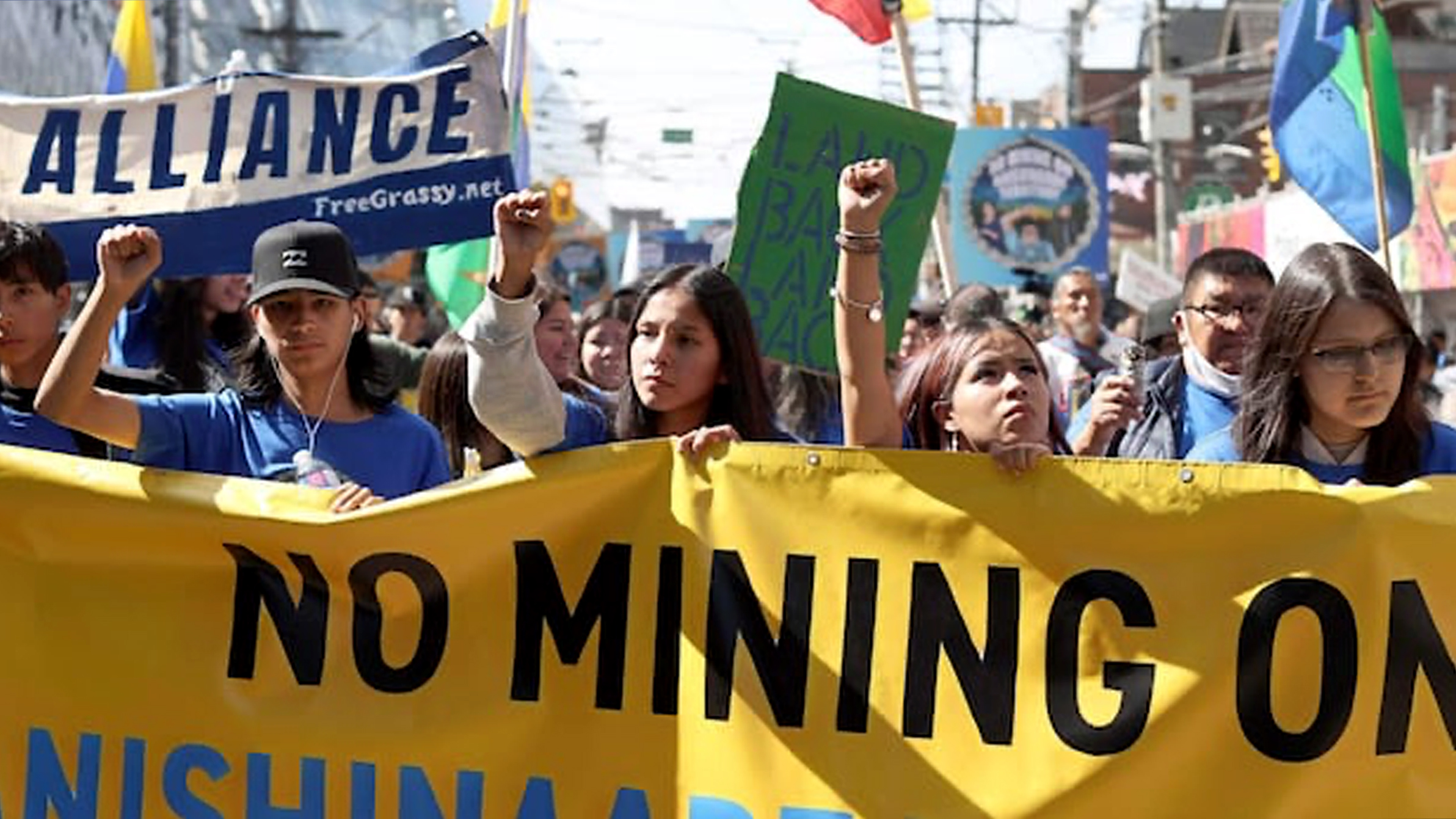
Thousands of Indigenous people people gathered at the Ontario Legislature to demand a face-to-face meeting with Premier Doug Ford. They say the province has allowed thousands of mining applications without their knowledge or consent. Source: CBC, 2023
RESEARCH